
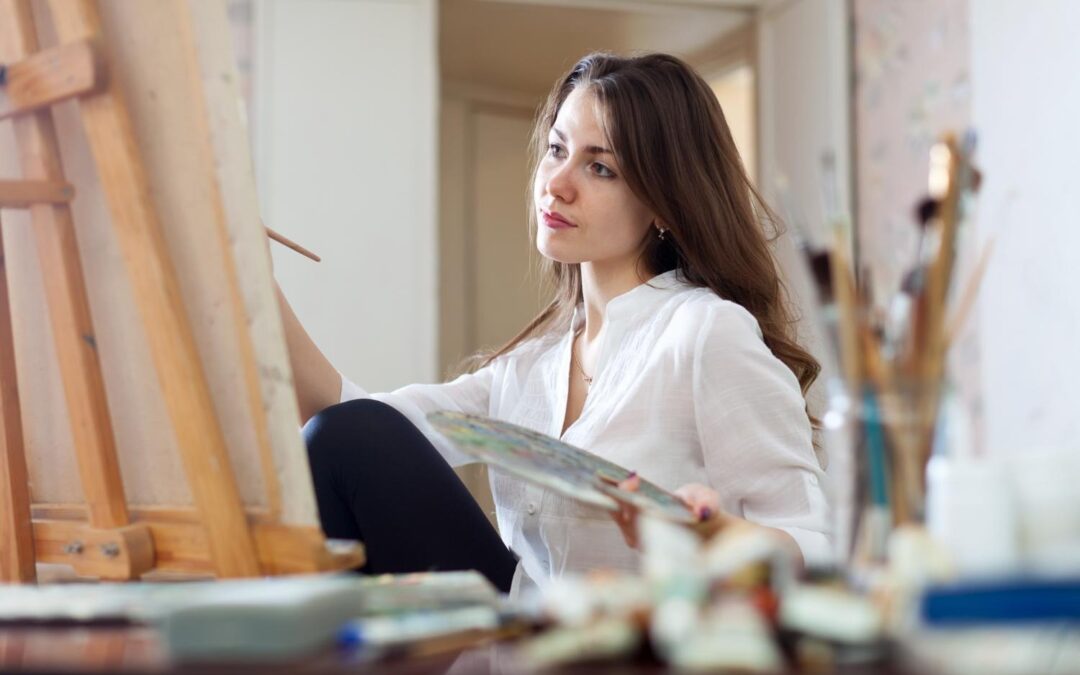
Every artist knows the feeling. The moment when time seems to stretch, distractions fade, and the work begins to move almost on its own. It’s often called “being in the zone,” but that state of deep focus can feel frustratingly unpredictable. Some days it arrives effortlessly; on others, it feels completely out of reach.
In a world built around constant notifications, short attention spans, and mental overload, sustained creative focus has become one of the most valuable, and fragile, resources an artist has. While inspiration is often romanticized, focus is usually what determines whether ideas actually make it onto the page, canvas, or screen.
Fortunately, creative flow is not purely accidental. There are practical ways to support it, both mentally and physically.
Understanding What “The Zone” Really Is
The zone isn’t magic. Psychologically, it’s a state of deep immersion where attention is fully absorbed in a task. External distractions lose their grip, self-doubt quiets down, and decision-making becomes more intuitive.
This state requires two things working together: a clear mental environment and enough energy to sustain attention. When either is missing, too much mental noise or too little stamina, focus collapses.
Artists often blame a lack of inspiration when the real issue is cognitive fatigue or overstimulation.
Designing An Environment That Supports Focus
The physical space where art is made has a powerful effect on attention. Cluttered surroundings compete for mental bandwidth, even when we think we’ve tuned them out. A workspace doesn’t need to be minimalist, but it should feel intentional.
Small adjustments help more than dramatic overhauls. Keeping tools within reach, reducing visual distractions, and having a consistent setup can lower the mental friction involved in starting. When the barrier to entry is low, it’s easier to slip into flow.
Lighting matters too. Natural light or warm, even illumination reduces eye strain and helps the brain stay alert without becoming overstimulated.
Routines That Signal The Brain It’s Time To Create
Many artists wait for motivation before starting. In practice, motivation often follows action, not the other way around. A short pre-creation ritual, making tea, stretching, reviewing reference material, can act as a signal to the brain that it’s time to focus.
These rituals don’t need to be elaborate. Their power lies in repetition. Over time, the brain begins to associate the routine with creative immersion, making it easier to transition into focused work.
Managing Energy, Not Just Time
Focus isn’t just about willpower. It’s deeply tied to energy levels. Long creative sessions demand sustained cognitive fuel, and when energy dips, attention scatters.
This is why many artists struggle during certain parts of the day. Instead of forcing productivity during low-energy windows, it can be more effective to align creative work with natural peaks in alertness.
Short breaks, hydration, and movement all help reset attention. Even brief pauses can prevent mental fatigue from building to the point where creativity stalls completely.
Supplements, Cannabis, And Creative Focus
As conversations around wellness evolve, more artists are openly discussing how different tools affect their ability to concentrate. Among these are CBD and THC products formulated specifically for focus and energy rather than sedation.
Unlike recreational use aimed at relaxation, low-dose formulations are often designed to support alertness, creative engagement, and mental clarity when used intentionally. For some artists, this becomes part of a broader focus strategy rather than a shortcut.
In this context, options like edibles for energy and focus are sometimes explored as a way to gently support sustained attention during long creative sessions, especially when traditional stimulants feel too harsh or disruptive.
As with any supplement, individual response varies, and mindful use is essential. The goal isn’t escape, but presence, staying engaged with the work rather than drifting away from it.
What Science Says About Focus And Flow
Research into attention and flow states continues to show that focus is influenced by both internal chemistry and external conditions. Stress, fatigue, and anxiety all interfere with the brain’s ability to enter deep concentration.
The National Institute of Mental Health has highlighted how attention regulation is closely linked to mental state, energy balance, and environmental factors. While creativity itself can’t be engineered, the conditions that allow it to emerge can be supported.
This aligns with what many artists experience firsthand: when the body and mind are reasonably balanced, creative work feels less forced and more fluid.
Letting Go Of Perfection To Stay In Flow
One of the biggest enemies of focus is self-monitoring. Constantly judging whether the work is “good enough” pulls attention out of the process and back into self-consciousness.
Staying in the zone often requires permission to be imperfect. Drafts, sketches, and experiments don’t need to succeed; they need to exist. When the pressure lifts, focus tends to return.
Many artists find it helpful to separate creation from evaluation, saving critique for a later session when focus is no longer needed for output.
Making Focus A Practice, Not A Coincidence
Getting into the zone isn’t about finding a single perfect trick. It’s about stacking small, supportive habits that make focus more likely over time. Environment, routine, energy management, and mindset all contribute.
When artists stop treating focus as something mysterious and start treating it as something they can gently support, creative work becomes more consistent, and often more satisfying.
The zone doesn’t disappear forever when it’s lost. It returns when the conditions are right. And learning how to shape those conditions may be one of the most valuable creative skills an artist can develop.