
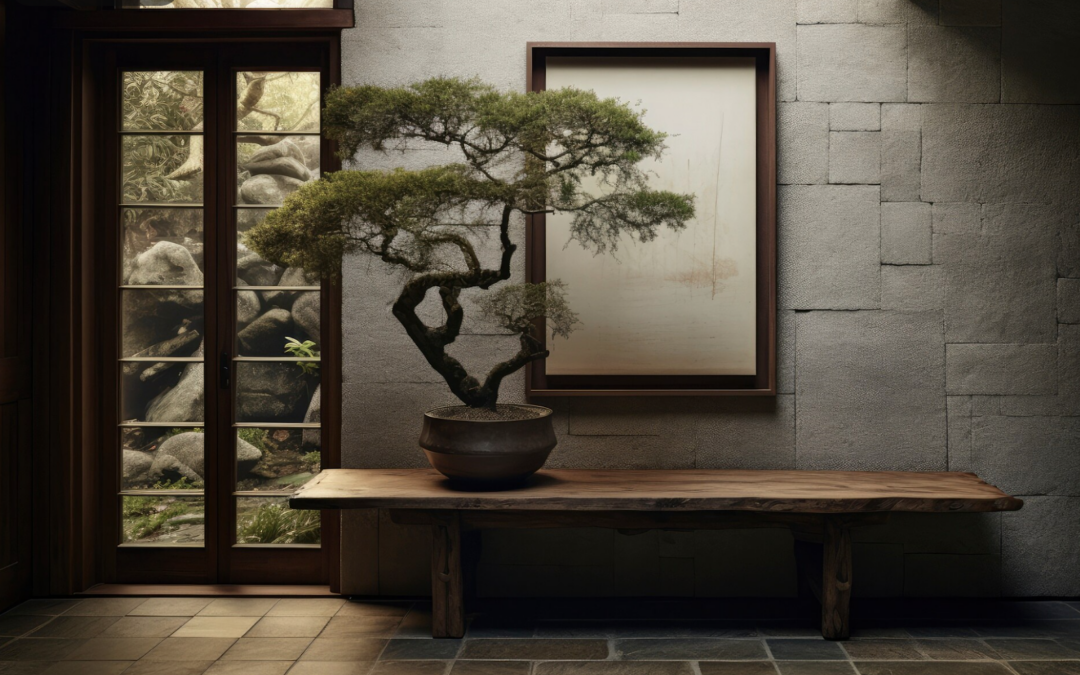
People see pale wood, clean lines, and open space, then file it away as “minimalism with a trendier name.” But the homes that feel truly Japandi aren’t the ones that look the emptiest. They’re the ones that feel calm without feeling sterile, spaces that hold quiet warmth, lived-in comfort, and a sense of intention you can’t quite put your finger on.
That “softness” doesn’t come from buying fewer things. It comes from choosing the right things, especially art. Japanese aesthetic art has a special ability to bring depth to modern interiors without adding visual noise. A single ink wash painting can make a room feel like it took a deep breath. A calligraphy piece can add energy and presence without shouting. Even a handmade ceramic vessel can function like a sculpture, grounding a space with texture and honesty.
If you love art and home design, this is where Japandi stops being a look and becomes a feeling. Let’s talk about how Japanese aesthetic art softens modern homes, and how to use it in a way that feels authentic, not themed.
What “Soft Japandi” Really Means
Japandi lives at the intersection of Japanese restraint and Scandinavian comfort. On one side you have the Japanese love of calm, negative space, and deliberate choices. On the other, the Nordic instinct to make simplicity feel cozy, warm textiles, natural light, and rooms that invite you to linger.
The “beyond minimalism” part is important. Minimalism can sometimes chase perfection: nothing out of place, nothing too personal, nothing that disrupts the clean aesthetic. Soft Japandi aims for something else. It’s more human. It’s tidy, yes, but it also welcomes irregularity, texture, and time-worn beauty.
There are three ideas that quietly guide most Japandi spaces that feel right:
Quiet focus. Instead of filling walls and shelves, you choose a few pieces with presence. The room isn’t trying to entertain you. It’s trying to steady you.
Natural harmony. Materials matter as much as objects. Wood grain, linen weave, handmade clay, and soft paper surfaces become part of the visual language.
Space to breathe. Negative space isn’t “empty.” It’s a design element. It allows art to feel like a statement rather than decoration.
This is why art matters so much. In a modern home, especially one with sleek furniture and neutral surfaces, art is often the moment that introduces emotion. Without it, the room can look polished but feel flat. With the right Japanese aesthetic piece, the room gains a pulse.
Think of a modern living room: low-profile sofa, pale oak coffee table, a rug in warm oatmeal tones. Lovely, but a little quiet in the wrong way. Now imagine one sumi-e ink painting above the sofa: a few brushstrokes suggesting a mountain ridge in fog. Suddenly the room has a horizon. You don’t just see the decor; you feel the mood.
Japanese Aesthetic Art Styles That Work Beautifully in Modern Homes
Japanese aesthetic art isn’t one thing. It’s a range of styles, each with its own personality, and each can soften a space differently.
Sumi-e (Ink Wash Painting)
Sumi-e is one of the easiest forms to integrate into modern design because it’s naturally minimal. The beauty lies in what isn’t spelt out. You get brushwork, water, and space, an image that feels both spontaneous and controlled.
In a Japandi home, sumi-e works especially well when the room is already restrained. It adds movement without adding clutter. The grayscale palette can echo modern black accents, think matte black lamp bases, slim curtain rods, or a simple frame, while keeping the overall feeling serene.
Styling tip: treat sumi-e like a window. Give it breathing room. One strong piece is often better than a cluster.
Ukiyo-e Prints
Ukiyo-e is more graphic and narrative. These prints can be stunning in a modern home, but they can also tip into “theme decor” if you’re not careful. The trick is to treat ukiyo-e as art first, cultural motif second.
Look for prints with quieter palettes or compositions that feel balanced with your interior. A single ukiyo-e piece, framed simply, can bring character into a room full of neutrals, like adding a dash of spice to a clean dish.
Styling tip: choose one bold ukiyo-e print and keep the surrounding decor calm. Let the print be the conversation starter.
Shodo (Japanese Calligraphy)
Calligraphy is essentially emotion in brush form. Even if you don’t read the characters, you can feel the energy, whether it’s calm, powerful, playful, or meditative.
In modern interiors, calligraphy can work like a focal anchor. One striking piece can pull a room together, especially if the space feels “too polite.” Calligraphy adds an edge that still feels elegant.
Styling tip: if the calligraphy has bold strokes, balance it with soft textures nearby, linen, boucle, wool, or even a plush throw.
Wabi Sabi Objects as Art
Not all art needs to hang on a wall. Wabi sabi celebrates imperfection, handmade character, and the marks of time. A hand-thrown ceramic vase, wabi sabi wall art, a tea bowl with subtle irregularities, or a textured vessel can function like sculpture.
This is where Japandi becomes deeply livable. A ceramic piece on a shelf doesn’t just “match” the room. It anchors it. It quietly says: this home is designed, but it’s also real.
Styling tip: choose objects with texture and restraint. One handmade ceramic piece on a console often does more than a row of decorative items.
When selecting Japanese aesthetic art for a modern home, keep three guidelines in mind:
- pick fewer pieces with stronger presence
- favor texture, negative space, and restraint over busy detail
- keep your palette tight (ink tones, warm neutrals, earth shades)
That’s how you avoid clutter while still adding soul.
Placement Rules That Make Japandi Art Feel Intentional
Art can either elevate a room or make it feel random. In Japandi interiors, placement is part of the mood. The goal is to make the art feel inevitable, like it was always meant to be there.
Use the One-Wall Principle
Not every wall needs a story. In fact, trying to make every wall interesting is one of the quickest ways to lose the calm Japandi feeling. Choose one or two key zones for art, then let the rest of the room breathe.
Best Places for Japanese Aesthetic Art
Entryway. This is where your home sets its tone. A quiet, intentional piece, ink painting, calligraphy, or a small framed print, creates a calming first impression.
Living room. Above a low sofa or a simple bench is classic Japandi. Choose a piece that feels grounded rather than flashy.
Bedroom. Art opposite the bed can create a restful focal point. Avoid anything too chaotic or overly bright. Think gentle composition, soft contrast.
Dining area. Japanese aesthetic art can encourage a slower, more mindful atmosphere, especially if your dining space is modern and clean-lined.
Frame and Mount Like You Mean It
Japandi framing is simple, not sterile. Natural wood frames, thin black frames, and wide mats work beautifully. Wide mats in particular can make even a small piece feel more important, because they create “space” around the image.
Also, consider hanging art slightly lower than the typical gallery height. A grounded placement feels more intimate and calm, less like a museum, more like a home.
Think in Scale and Silence
A common mistake is choosing art that’s too small, then adding more pieces to compensate. In Japandi, one larger piece often looks calmer than many small ones.
Aim for generous spacing. Clean edges. No crowding. Let the art have silence around it.
Styling Pairings That Add Warmth Without Clutter
Here’s a simple way to think about Japandi styling: you’re not decorating with objects. You’re composing with atmosphere.
A useful formula is: art + texture + one organic element. That’s it.
Pairing Ideas That Work
- Ink art + linen curtains + raw wood. The linen softens the lines, the wood adds warmth, the ink brings focus.
- Ukiyo-e print + neutral rug + one ceramic vase. The print adds personality; everything else keeps it grounded.
- Calligraphy + warm lighting + branch arrangement. The light makes it inviting, the organic element adds life, the calligraphy gives presence.
Create a Tokonoma-Inspired Moment
In traditional Japanese interiors, the tokonoma is a small alcove where art and objects are displayed with intention. You can borrow the concept without copying the architecture.
Pick a small area—a console table, a shelf, a nook near a window—and curate it with three elements:
- one artwork (framed print, ink painting, or small calligraphy piece)
- one object (ceramic, stone, wood, or a sculptural vase)
- one seasonal element (a branch, dried stems, a single bloom, or pine)
The point isn’t to “decorate.” It’s to create a quiet focal moment in the room.
Keep It Cohesive Over Time
Japandi looks best when it evolves slowly. Instead of adding more, rotate what you already have. Swap a print seasonally. Change a branch arrangement. Move a ceramic piece from shelf to table.
Also, resist the temptation to put too many bold statement pieces in one space. If you have a strong calligraphy piece, you might not need another high-contrast artwork across the room. Let one piece lead.
And repeat materials quietly. If you have a natural oak frame, echo that wood tone in a stool or tray. If you have ink art, bring in a matte black detail elsewhere. These small repetitions make the room feel cohesive without looking styled.
Conclusion
Japandi isn’t just about owning less. It’s about choosing what stays, and giving it room to matter. That’s why Japanese aesthetic art plays such a powerful role in modern interiors. It brings softness without clutter, emotion without chaos, and presence without needing to be loud.
Whether you lean toward sumi-e, ukiyo-e, calligraphy, or wabi-sabi ceramics, the goal is the same: let the art shape the mood. Give it breathing room. Pair it with texture. Add one organic element to keep the space alive.
If you want to try this approach today, start small but meaningful. Choose one Japanese-inspired piece you genuinely connect with, place it where your eyes naturally land, and build the room around that calm centre. That’s Japandi beyond minimalism, the version that looks beautiful, but more importantly, feels good to live in.