
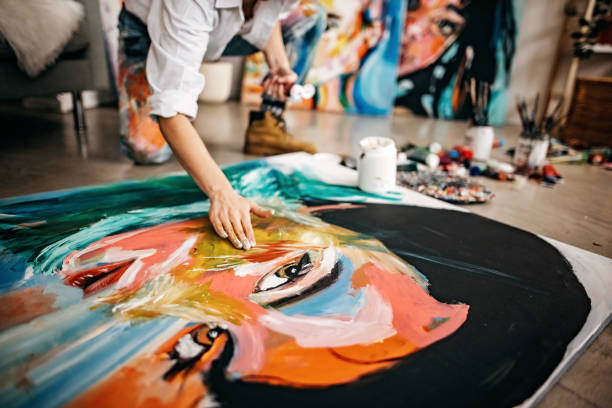
Abstract artistic expression often feels spontaneous, emotional, and deeply personal. Yet beneath intuition lies biology. Hormones such as estrogen and testosterone play a subtle but measurable role in how the brain processes emotion, symbolism, risk-taking, and creativity.
Understanding these influences helps artists, researchers, and curious readers see creativity not as magic, but as a neurobiological process shaped by chemistry, cognition, and experience.
Estrogen and Testosterone: A Neurobiological Overview
Estrogen and testosterone are steroid hormones present in all genders, though at different average levels.
Both hormones cross the blood–brain barrier and bind to receptors in regions tied to creativity:
- Prefrontal cortex (planning, abstraction)
- Limbic system (emotion, mood)
- Amygdala (emotional intensity, interpretation)
These hormones influence:
- Neural plasticity
- Emotional regulation
- Visual and symbolic processing
Hormones do not “cause” creativity; they modulate cognitive tendencies.
Estrogen and Abstract Creative Cognition
Estrogen is strongly associated with cognitive flexibility, a cornerstone of abstract art.
Key effects linked to estrogen:
- Enhanced divergent thinking (generating multiple interpretations or ideas)
- Improved pattern recognition and symbolic association
- Increased sensitivity to color, nuance, and emotional tone
Research in neuropsychology suggests higher estrogen states correlate with:
- Greater openness to ambiguity
- Non-linear thinking styles
- Rich emotional layering in visual and conceptual art
These traits align closely with abstract painting, conceptual design, and experimental visual arts.
Testosterone and Artistic Risk-Taking
Testosterone is often associated with assertiveness and exploratory behavior, which in turn influence abstract expression.
Cognitive and behavioral associations:
- Increased risk tolerance
- Stronger drive toward bold forms, scale, and contrast
- Preference for decisive, high-impact artistic choices
In abstract art, this may appear as:
- Aggressive brushwork or geometry
- Minimalist but forceful compositions
- Emphasis on structure over ambiguity
Importantly, optimal creativity is often associated with balanced, rather than extreme, testosterone levels.
Hormonal Balance, Brain States, and Creativity
Creativity thrives when the brain can move fluidly between:
- Emotional intuition (limbic system)
- Analytical control (prefrontal cortex)
Hormonal balance supports this integration. Disruptions, whether from aging, menopause, andropause, or medical conditions, can affect:
- Motivation
- Emotional depth
- Cognitive stamina
For individuals exploring medically supervised hormone balance, modern telehealth options such as HRT online make access to professional guidance more convenient while maintaining clinical oversight.
Abstract Art Across Life Stages
Hormonal influence on creativity changes across the lifespan:
- Adolescence: Heightened emotional intensity and experimentation
- Mid-adulthood: Stabilization of style and conceptual depth
- Later life: Shifts in abstraction, symbolism, and emotional themes
Many artists report changes in artistic voice during hormonal transitions, not as a decline, but as evolution.
Practical Takeaways for Artists and Thinkers
- Awareness of hormonal states can help artists understand creative cycles.
- Mood, energy, and abstraction styles may shift naturally over time.
- Scientific insight enables artists to work with their cognitive rhythms rather than against them.
Conclusion
Abstract artistic expression emerges from a dialogue between brain chemistry, emotional experience, and conscious intent. Estrogen and testosterone subtly shape how ideas form, emotions surface, and meaning is abstracted. Recognizing this connection deepens both artistic practice and appreciation, grounding creativity in science without diminishing its mystery.